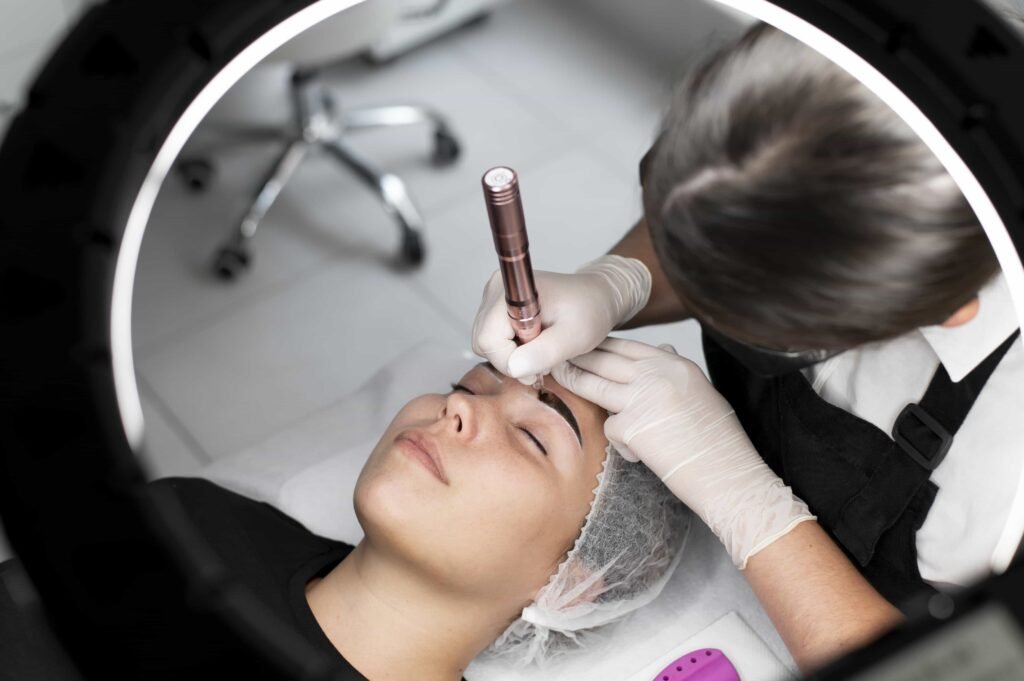
The best permanent makeup artist in Dallas works from a studio holding a current Texas DSHS license, shows you healed photos instead of fresh ones, maps your brow shape before any pigment touches your skin, and tells you honestly when you are not a good candidate. Credentials get an artist on your list. Healed work decides who stays on it.
Choosing a permanent makeup artist is not like booking a facial. If a facial goes badly, you wash your face. If cosmetic tattooing goes badly, you live with it for a year or more, and correction work costs more than getting it right the first time.
So take the extra hour. Below is the exact process I would use if I were sitting on your side of the consultation chair, including the license check most people skip and the three questions that separate a skilled artist from a well-marketed one.
What to check before you book a Dallas PMU artist
Run every artist you are considering through these six checks. Any artist who fails two or more of them should come off your shortlist.
Check
Why it matters
How to verify it
Texas studio license
Permanent makeup counts as tattooing under Texas law. Unlicensed studios skip inspections.
Ask to see it on the wall, then confirm on the DSHS verification page.
Healed photos
Fresh work always looks sharp. Pigment softens and shifts color as it settles.
Ask for photos taken 6 to 8 weeks after the touch-up, not day-of shots.
Work on skin like yours
Oily, mature and darker skin all hold pigment differently.
Ask directly: show me a client with my skin type and my brow density.
Bloodborne pathogen training
This is the training that keeps single-use needles single-use.
Ask when the certificate was last renewed. It expires annually.
Written aftercare
Healing is roughly half your result. Vague aftercare means vague results.
Ask for the printed or emailed aftercare sheet before you book.
A real consultation
Shape and color should be agreed before the needle, never during.
Confirm mapping and a pigment patch discussion happen before you commit.
Texas licenses the studio, not the individual artist. The Department of State Health Services requires a license for any business inserting pigment under the skin, and its rules specifically name permanent cosmetics and microblading. See the DSHS licensing requirements for the full standard. Licences are site specific and must be displayed prominently, so if you cannot see one on the wall, ask why. Do this before you pay a deposit: search the studio on the DSHS license verification tool. It takes about ninety seconds and it is the single highest-value check on this list.
What a permanent makeup portfolio should actually show you
Most Dallas PMU portfolios are photographed within ten minutes of the needle coming off the skin. At that moment the strokes are still swollen and the pigment sits at its darkest. That photo tells you almost nothing about what you will see in the mirror two months later.
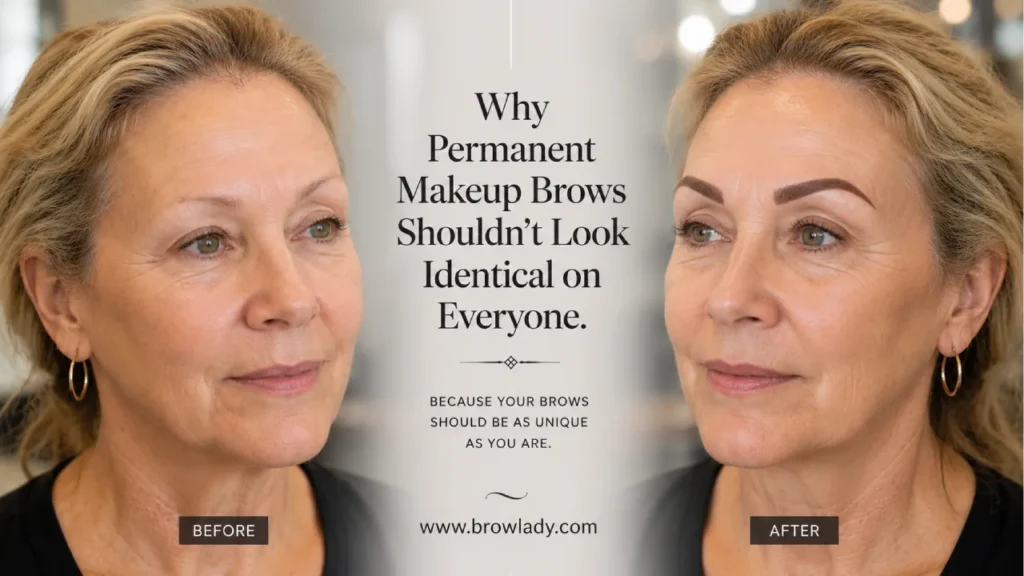
Ask for healed work. Specifically, ask to see the same client twice: immediately after the first session, and again six to eight weeks after the touch-up. An artist with nothing to hide will have plenty of these pairs.
Three things to look for in healed photos
Color that stayed warm and skin-toned rather than turning grey, blue or orange.
Tails that still exist. Brow tails fade fastest and are the first place inexperience shows.
Symmetry on a relaxed face, not a face angled to flatter the shot.
This comes up constantly with correction cases. Someone was microbladed a few years ago, the pigment healed cool and grey, and now they want it fixed. A good artist will not simply tattoo over it. They will assess how much old pigment is still sitting in the skin, explain whether removal or lightening is needed first, and sometimes tell you to wait. You can see how healed work is supposed to read in the BrowLady before and after gallery.
Which permanent makeup service in Dallas is right for you?
Booking the wrong service is the most common mistake I see, and it usually happens because someone searched a trend rather than describing their actual problem. Use this table to match the service to your skin and your goal.
Service
Best for
Skin note
Typical refresh
Microblading
Sparse brows needing fine hair strokes for a natural look
Best on normal to dry skin
12 to 18 months
Ombre or powder brows
Soft, filled-in makeup effect with strong tail definition
Holds well on oily skin
2 to 3 years
Combination brows
Hair strokes at the front, shading through the body and tail
Works on most skin types
18 months to 2 years
Permanent eyeliner
Definition without daily pencil, and for shaky hands or contact wearers
Suits most skin types
2 to 3 years
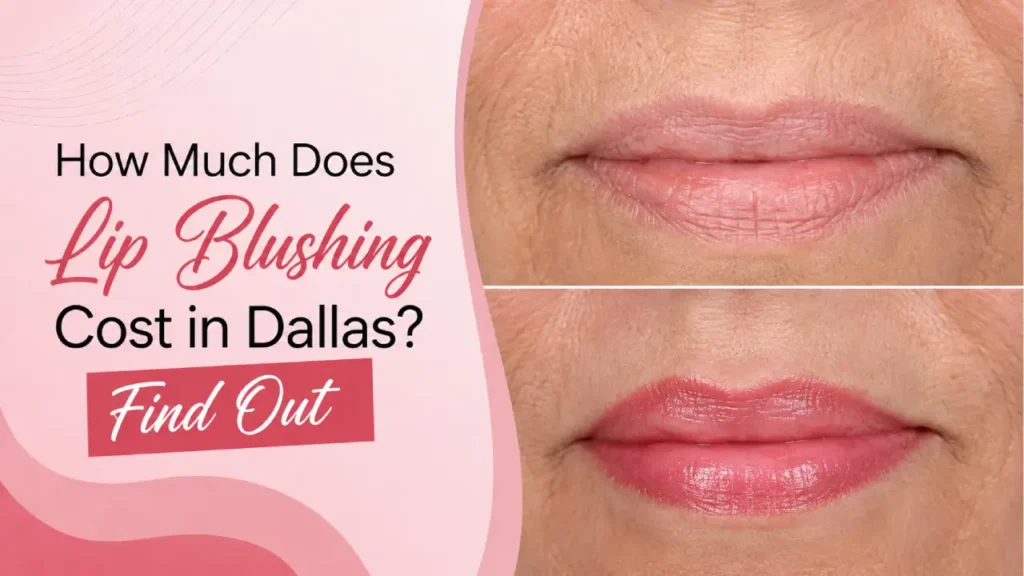
Lip blush
Restoring color to pale lips and softening an uneven lip line
Color result depends on natural lip tone
2 to 4 years
Lash line enhancement
Fuller lash line with no visible liner
Suits most skin types
2 to 3 years
Dallas summers change this recommendation more than people expect. Humidity and heat push oil production up, and oily skin blurs fine microblading strokes faster than anything else. If your T-zone shines by lunchtime, I would steer you toward 3D ombre eyebrow tattooing over microblading in Dallas, even if microblading is what you came in asking for. The healed result will hold its edges for years longer. If you are still deciding between brow techniques, the permanent eyebrows service page breaks down each option. For eye and lip work, compare permanent eyeliner, lip blushing and eyelash enhancement tattoo before your consultation so you arrive with a shortlist rather than a blank page.
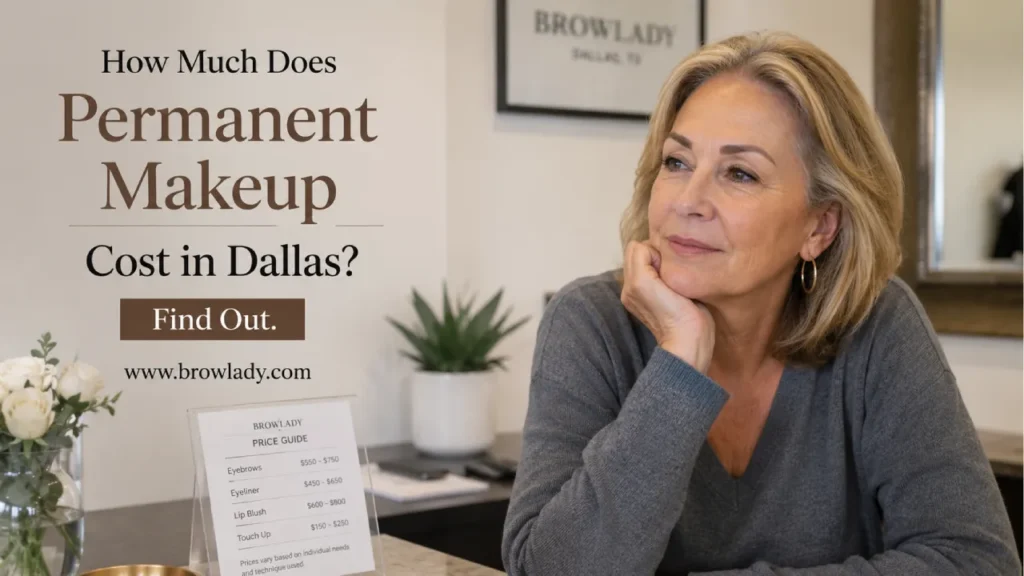
How much should the best PMU artist in Dallas cost?
Dallas pricing sits across a very wide band, and price alone is a poor signal. What matters is what the number includes. Two studios quoting the same figure can be selling completely different things.
Ask what is bundled into the quote
Is the 6 to 8 week perfecting session included, or billed separately?
Does the price cover the consultation and mapping, or is that a separate booking?
What does the annual color refresh cost once you are past the first year?
Is the deposit applied to the service or held as a booking fee?
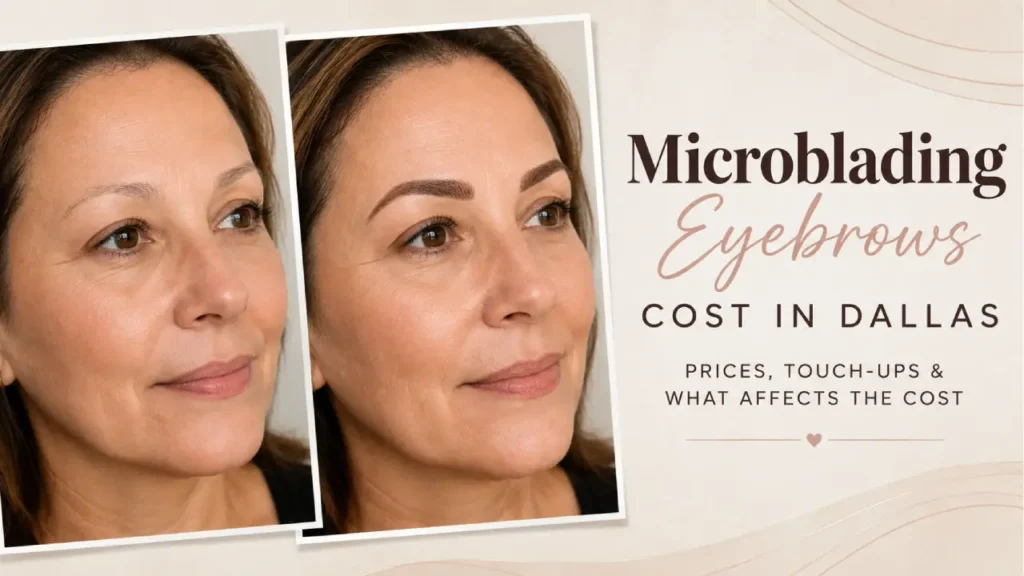
A quote that looks 30 percent cheaper often excludes the touch-up, which is not optional. Without that second session, brows heal patchy and you will pay for a correction anyway. For a realistic breakdown, read what microblading eyebrows cost in Dallas, then compare quotes on total cost through the first year rather than on the headline price.
What happens in a consultation with a certified permanent makeup artist
A consultation is not a sales call. It is the appointment where you find out whether this artist actually listens. Here is what a thorough one looks like, in order.
You complete a medical history form covering medications, skin conditions, allergies and recent cosmetic treatments.
The artist looks at your bare face and assesses your natural brow density, skin type and undertone.
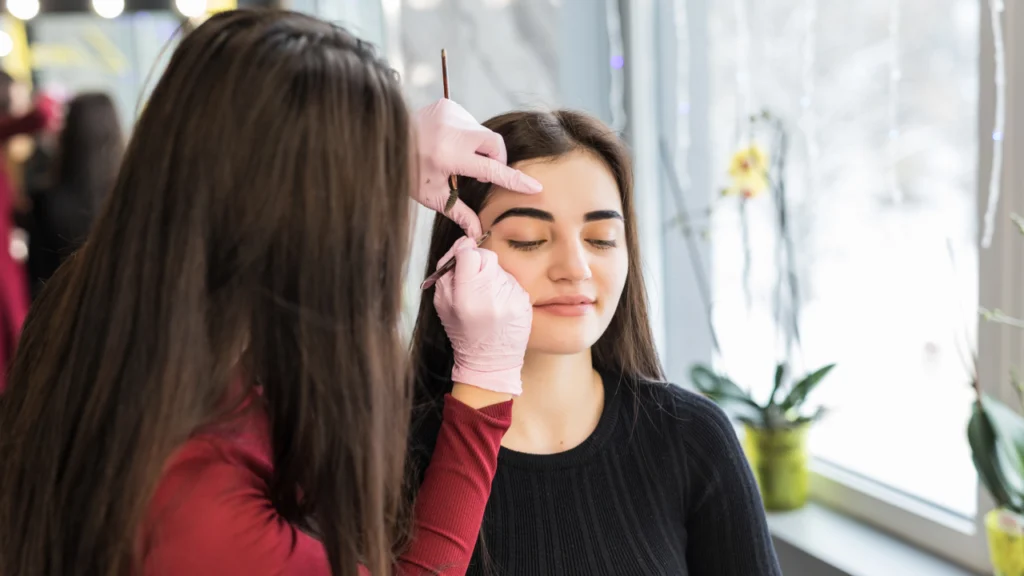
Your brows are mapped with a pencil and measuring thread while you sit upright, not lying down.
You look in a mirror, in normal light, and approve or adjust the shape before anything permanent begins.
Pigment color is selected against your skin undertone and your existing hair color, with the healed shade explained.
The artist walks you through the healing timeline, the aftercare rules and the touch-up schedule.
You are told plainly if you are not a candidate today, and what would need to change.
Step seven is the one that separates professionals from technicians. Active eczema on the brow area, a fresh chemical peel, recent Accutane use or an unhealed cold sore near the lip line are all reasons to reschedule rather than proceed. An artist willing to lose the booking to protect your result is the artist you want. You can review BrowLady’s consent and medical history forms ahead of time so nothing at the appointment is a surprise.
Red flags that should make you cancel a Dallas PMU appointment
Trust these. Every one of them shows up in correction consultations.
No license visible in the studio and no clear answer when you ask about it.
The portfolio contains only day-of photos and heavily filtered images.
You are pushed to decide on the shape while already reclined in the chair.
Pricing is quoted only over direct message and changes when you ask what is included.
Aftercare is delivered verbally with nothing written to take home.
You are promised the brows will look identical forever with no touch-ups needed.
The artist works from a home kitchen or a space with carpeted floors and no dedicated sink.
On that last point: Texas rules require studios to operate from permanent, non-dwelling premises with smooth, non-porous, cleanable surfaces. A converted spare room is not a licensed studio. If the address looks residential, ask more questions before you go, and read the microblading touch-up guide so you know what a normal healing and maintenance schedule should look like.
How to decide between two artists you both like
At this point you probably have two names and a stalled decision. Score them on these four things and the answer usually appears.
Factor
Choose Artist A if
Choose Artist B if
Healed portfolio
They have healed photos of your skin type and brow density
They have volume but no match for your face
Consultation depth
They mapped your brows and adjusted twice before you approved
They mapped once and moved straight to pricing
Correction experience
They regularly fix and color-correct older work
They only ever work on virgin skin
Availability
They have realistic lead time and a clear touch-up slot
They can fit you in tomorrow with no touch-up booked
The tiebreaker is correction experience. An artist who spends part of every week fixing other people’s faded, grey or over-shaped work understands pigment behavior at a level that someone working only on fresh skin does not. That knowledge protects you two years from now, which is when it matters. Distance is worth mentioning too. People searching for the best permanent makeup artist in East Dallas often rule out studios twenty minutes further out, which is a mistake for a service you will visit maybe three times a year. Clients regularly travel in from the northern suburbs, and there are dedicated pages for areas like permanent makeup in Plano if you are coming from that side of the metroplex.
Book a consultation with BrowLady in Dallas
If you have read this far, you already know more about choosing a permanent makeup artist than most people do when they book. The next step is to sit down with someone and get an honest read on your skin, your brow density and what is realistic for your face. Silvia Young has built BrowLady around exactly that conversation, and you can read more about her training and approach on the BrowLady about page.
Bring photos of brows you like and brows you do not. Come with bare skin and a list of questions from this article. You will get a straight answer about what suits you, including if the answer is that you should wait.
Schedule your permanent makeup consultation at BrowLady in Dallas. Book your appointment here and bring your questions. There is no obligation to book the procedure on the same day.
FAQs
How do I check if a Dallas permanent makeup artist is licensed?
Texas licenses the studio rather than the individual artist. Ask to see the DSHS license displayed in the studio, then confirm it on the DSHS license verification page. Licenses are site-specific, so it must match that exact address.
How do I choose the best permanent makeup artist in Dallas?
Choose based on healed photos, not fresh ones. Confirm the studio holds a current Texas DSHS license and ask to see clients with your skin type. At BrowLady in Dallas, brows are mapped and approved in the mirror before any pigment is applied.
What makes a good permanent makeup artist?
A good permanent makeup artist maps your shape before touching a needle, matches pigment to your skin undertone, and tells you honestly when you are not a candidate. Technical skill matters, but color theory and candidacy screening separate strong artists from average ones.
Who is the best PMU artist in Dallas?
No single artist suits everyone, because results depend on your skin type, brow density and goals. Silvia Young of BrowLady works from a licensed Dallas studio specializing in brows, eyeliner and lip blush. Compare healed galleries side by side before you decide.
How much experience should a permanent makeup artist have?
Look for at least two to three years of full-time work and hundreds of completed procedures, including touch-ups and corrections on other artists’ work. Correction experience matters most, since it proves the artist understands how pigment behaves years after the first session.
What certifications should a permanent makeup artist have?
Texas requires the studio to hold a DSHS license, and artists must complete bloodborne pathogen training, typically renewed each year. Beyond that, look for technique-specific training certificates in microblading, powder brows, eyeliner or lip blush from a recognized academy.
How can I tell if a permanent makeup artist is qualified?
Verify the studio license on the Texas DSHS site, then ask for healed photos taken six to eight weeks after the touch-up. Check whether any of that healed work is on skin like yours. Qualified artists answer both questions without hesitating.
What questions should I ask before booking permanent makeup?
Ask five things: is the studio licensed, can I see healed photos of my skin type, is the touch-up included in the quoted price, which pigment brand and batch will you use, and what happens if I dislike the mapped shape?
Himanshu Purwar writes about permanent makeup and beauty topics for BrowLady. His goal is simple: answer the questions clients are already asking in a clear, honest, and easy-to-read way.
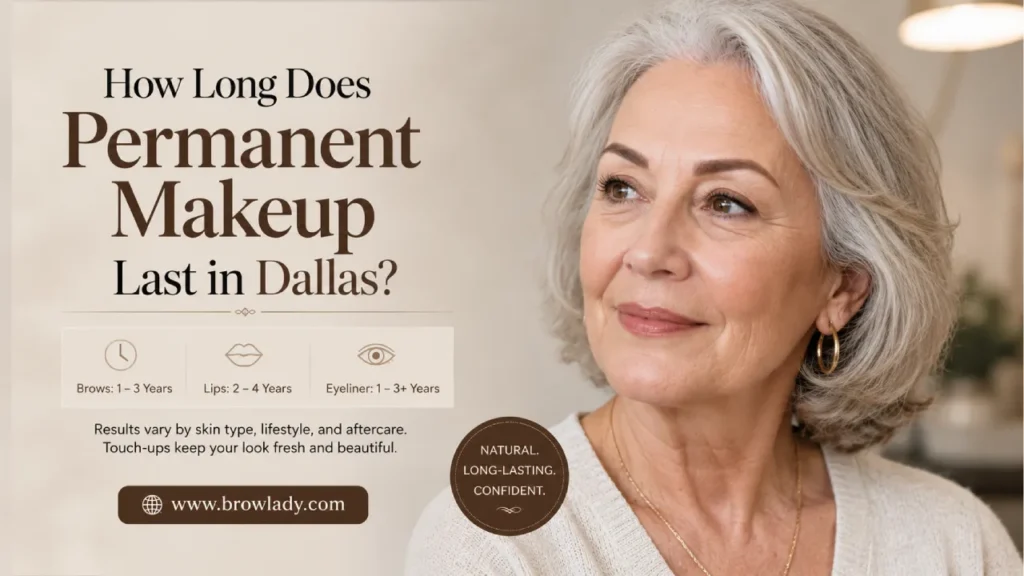
Wondering how long permanent makeup really lasts? Learn what affects fading, how long brows, lip blush and eyeliner can last, and when to book a touch-up.
How much does permanent makeup cost in Dallas? Get a clear look at current pricing, what affects the cost, touch-ups, and what you're really paying for.
Book the Best Makeup Artist in Dallas at Browlady. Bridal, event & semi-permanent makeup by a trusted Professional Makeup Artist Dallas. Reserve today!
In Dallas, beauty trends come and go, but one that continues to stay at the forefront is microblading. Loved by women and men alike, this semi-permanent makeup technique has revolutionized how we achieve fuller, more symmetrical, and effortlessly natural-looking brows.